DART CHECKOUT CALCULATOR (PRO LEVEL TOOL)
Dart Checkout Calculator
Enter your remaining score
Darts is a game of precision, mental arithmetic, and strategy. While throwing accuracy is essential, one of the biggest separators between casual players and serious competitors is checkout ability—the skill of finishing a leg efficiently and under pressure. This is why using a dart checkout calculator (pro level tool) is the fastest way to master your game and stop missing doubles.
A darts checkout calculator helps players determine the best possible combinations to finish a score, usually ending on a double. Whether you are a beginner learning the fundamentals or an advanced player fine-tuning your endgame strategy, understanding how checkout calculators work can significantly improve your performance.
This article provides a complete, in-depth guide to darts checkout calculators: what they are, how they work, why they matter, and how players at every level can use them to improve consistency, confidence, and results.
You can also compare this with the Darts score calculator.
Understanding Darts Checkout Basics
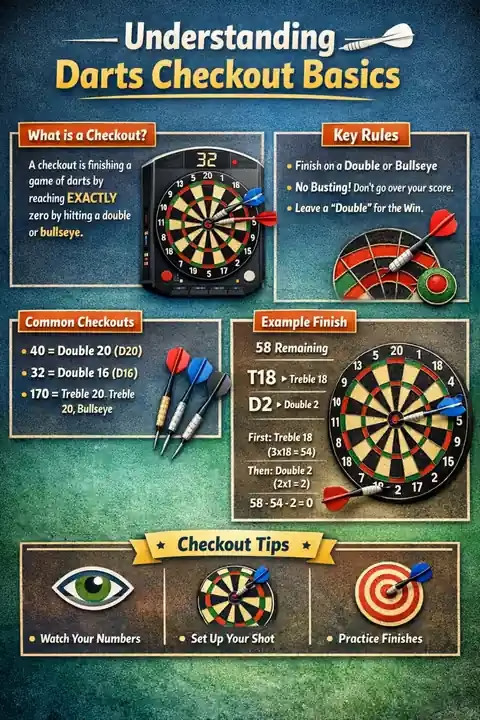
In standard games such as 501 or 301, a player must reduce their score to exactly zero, finishing on a double (or bullseye in some formats). This final phase of a leg is called the checkout. Try the checkout calculator & scoring tool here.
For example:
A score of 40 is commonly finished with Double 20
A score of 32 is often finished with Double 16
A score of 170, the highest possible checkout, requires T20, T20, Bull
The challenge lies in quickly identifying the best route—especially under match pressure. This is where many players struggle, particularly when facing unfamiliar numbers or awkward finishes.
Why use our dart checkout calculator (pro level tool)?
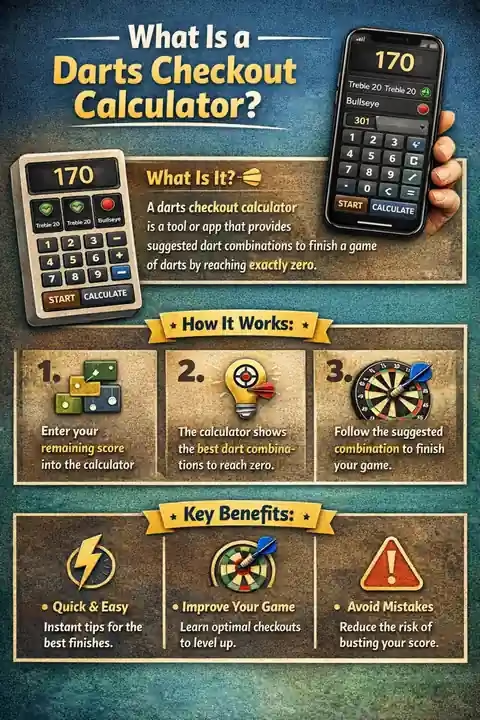
A Darts Checkout Calculator is a tool—digital or printed—that instantly shows the most efficient dart combinations needed to finish a given score.
Instead of mentally calculating routes such as:
Which triple to aim for
How to leave a favorable double
What backup options exist if a dart misses
…the calculator provides this information automatically.
Checkout calculators are available in several formats:
Online web tools
Mobile apps
Embedded tools on darts websites
Printable checkout charts
Integrated scoring systems on electronic dartboards
How a Darts Checkout Calculator Works
At its core, a checkout calculator uses simple arithmetic combined with established darts strategy.
Input
The player enters their remaining score, usually between 2 and 170.
Processing
The calculator evaluates:
Optimal triple routes
Preferred doubles (commonly D16, D20, or D18)
Standard professional finishing paths
Valid combinations within three darts
Output
The calculator displays:
The recommended darts to throw
Backup options if the first dart misses
Alternative routes for different skill levels
For example, entering 76 may return:
T20 → D8
Or T16 → D14
Or 20 → D18 (safer option)
Why Checkout Calculators Matter in Darts
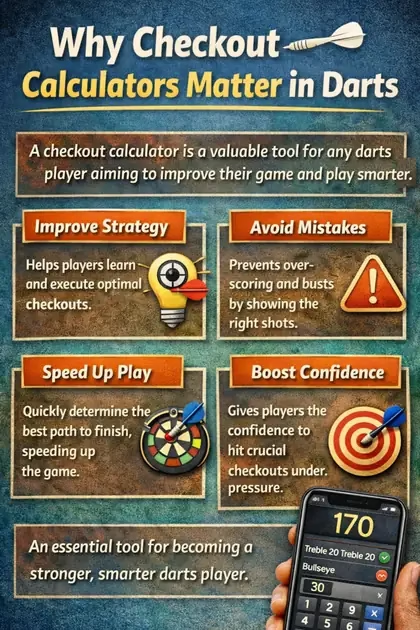
1. Faster Decision-Making
In competitive darts, hesitation can break rhythm. A checkout calculator trains players to recognize finishes instantly, reducing decision time at the oche.
2. Improved Accuracy
Knowing the correct route allows players to commit fully to each dart, rather than second-guessing their target.
3. Better Match Results
Many legs are lost not because of poor scoring, but because of missed doubles or inefficient routes. Strong checkout knowledge directly translates into more won legs.
4. Confidence Under Pressure
When players trust their finishing strategy, nerves decrease and consistency improves—especially in close matches.
Checkout Calculators for Beginners
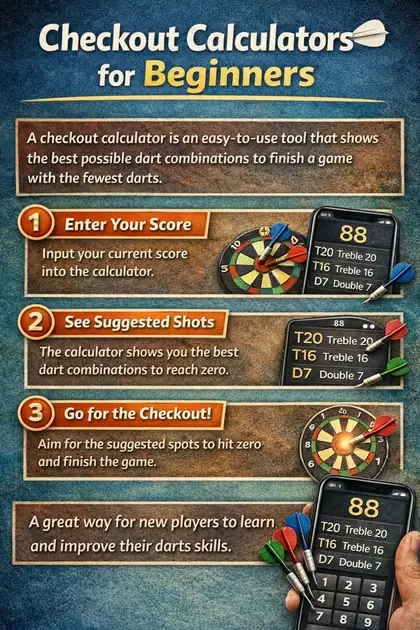
For new players, darts math can feel overwhelming. A checkout calculator simplifies the learning curve by teaching:
Which doubles are commonly used
Why certain routes are preferred
How to avoid “bogey numbers” (scores that cannot be finished in three darts)
Beginners often benefit from calculators that prioritize:
Single numbers over triples
Larger doubles
Clear, simple routes
For example, instead of suggesting T18 → D10, a beginner-friendly calculator may recommend 18 → D16, which is easier to execute.check out our Best Darts Practice Games for Beginners page.
Advanced Checkout Calculators for Experienced Players
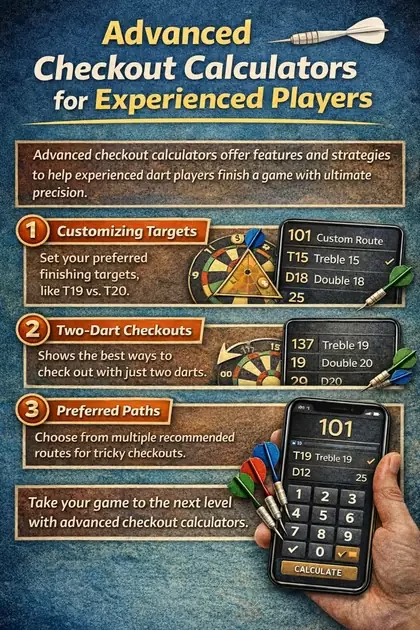
Advanced players use checkout calculators differently. Instead of simply finding any finish, they focus on:
Percentage-based routes
Board positioning
Setup shots for missed doubles
Match-play strategy
For instance, top players often prefer leaving D16 because misses tend to land in usable areas, whereas missing D20 can leave awkward numbers.
Advanced calculators may include:
Multiple route options
Miss-hit analysis
Practice mode simulations
Professional checkout preferences
Common Checkout Ranges Explained
Low Checkouts (2–40)
These are usually straightforward doubles:
2 → D1
32 → D16
40 → D20
A checkout calculator helps players consistently aim for their strongest doubles.
Medium Checkouts (41–100)
This is where route selection becomes important:
60 → 20, D20
78 → T18, D12
96 → T20, D18
Calculators help avoid risky setups and guide players toward higher-percentage finishes.
High Checkouts (101–170)
These require precision and planning:
121 → T20, T11, D14
141 → T20, T19, D12
170 → T20, T20, Bull
A checkout calculator is essential for memorizing these combinations.
Online vs Offline Checkout Calculators

Online Calculators
Pros
Always updated
Easy to access
Often free
Interactive interfaces
Cons
Requires internet access
May include ads or distractions
Offline Calculators (Apps or Charts)
Pros
Usable anywhere
No internet required
Great for practice rooms
Cons
Less interactive
Limited customization
Many players use both—online calculators for practice and offline references during matches.
Using a Checkout Calculator for Practice
A darts checkout calculator is not just a match-day tool; it is also a powerful training aid.
Practice Ideas
Enter random scores and visualize the routes
Practice only doubles suggested by the calculator
Simulate missed darts and follow backup routes
Focus on finishing from 60–100 repeatedly
Over time, these combinations become second nature, reducing reliance on the calculator itself.
Checkout Calculators and Scoring Systems
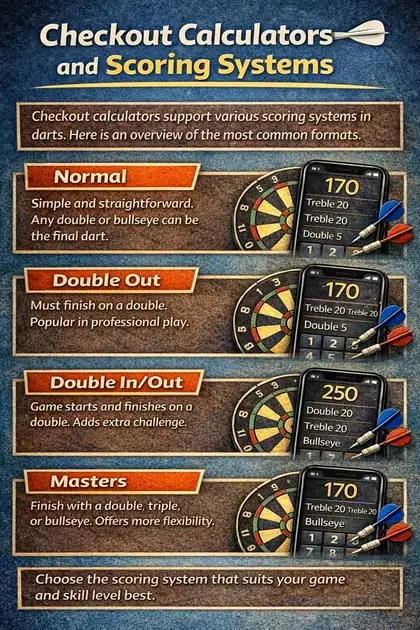
Modern electronic scoring systems often include built-in checkout calculators. These systems automatically:
Track remaining scores
Suggest finishes after each visit
Highlight preferred doubles
This integration is especially useful in league play, practice sessions, and home setups.
Accuracy vs Strategy: Why Calculators Don’t Replace Skill
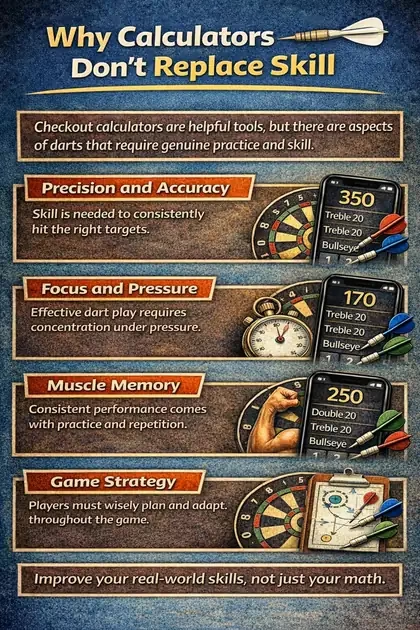
While checkout calculators are extremely useful, they do not replace:
Throwing technique
Mental toughness
Match awareness
A calculator suggests routes, but execution still depends on the player. The best players use calculators as learning tools, not crutches.
Understanding why a route is recommended is just as important as knowing what the route is.
Educational Value of Checkout Calculators
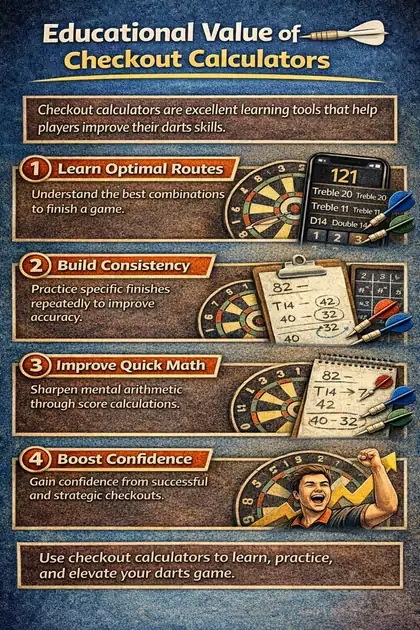
From an educational standpoint, darts checkout calculators provide:
Structured learning
Logical thinking development
Mental arithmetic practice
Strategic planning skills
These benefits make checkout calculators popular content on darts websites, blogs, and training platforms—especially when paired with explanatory articles, tutorials, and practice guides.
Choosing the Right Darts Checkout Calculator
When selecting a checkout calculator, consider:
Your skill level
Preferred doubles
Simplicity vs advanced features
Mobile or desktop access
Practice mode availability
A good calculator should enhance learning, not overwhelm the user.
The Future of Darts Checkout Calculators

As technology evolves, checkout calculators are becoming more sophisticated. Emerging features include:
Artificial intelligence recommendations
Personalized finish preferences
Performance tracking
Match simulation tools
These advancements are helping players train smarter and play more confidently.
Frequently Asked Questions (FAQs)
Q1:What is a darts checkout calculator?
A darts checkout calculator is a tool that shows the best possible dart combinations to finish a remaining score, usually ending on a double. It helps players choose the correct targets quickly and avoid calculation mistakes.
Q2:How does a darts checkout calculator work?
You enter your remaining score, and the calculator displays recommended dart combinations that can finish the leg in one visit. Most calculators suggest routes that end on popular doubles like Double 16 or Double 20.
Q3:What is the highest checkout possible in darts?
The highest possible checkout in standard 501 double-out darts is 170, achieved by hitting Triple 20, Triple 20, and Bullseye.
Q4:Can all numbers be checked out in darts?
No. Some numbers, called bogey numbers, cannot be finished in three darts under double-out rules. Examples include 169, 168, 166, 165, and 163.
Q5:Do I always have to finish on a double?
In most official darts games such as 501 and league play, you must finish on a double. Casual games may allow different rules, but double-out is the most common format.
Q6:Is a darts checkout calculator allowed in tournaments?
In professional or official matches, players are usually not allowed to use external aids during play. Checkout calculators are mainly used for practice, training, and casual games.
Q7:Are checkout calculators useful for beginners?
Yes. Beginners benefit greatly from checkout calculators because they reduce mental math, teach common finishing routes, and build confidence when learning how to finish legs.
Q8:Do checkout calculators always suggest the same route?
Most calculators show the standard or most common checkout route, but some may offer alternative options depending on preferred doubles or safer single-number finishes.
Q9:Why do many players aim for Double 16?
Double 16 is popular because missing inside often leaves Double 8, which is still a manageable finish. This makes it a safer option compared to some other doubles.
Q10:Can using a checkout calculator improve my game?
Yes. Regularly using a checkout calculator during practice helps players memorize finishes, improve decision-making, and become more consistent under pressure.
Conclusion
A Darts Checkout Calculator is one of the most practical tools available to players who want to improve their finishing ability. From beginners learning their first doubles to experienced competitors refining high-checkout routes, calculators simplify decision-making and strengthen confidence at the oche.
By understanding how checkout calculators work—and by using them consistently in practice—players can turn one of darts’ most challenging aspects into a reliable strength.
In a game where matches are often decided by a single double, mastering checkouts is not optional—it is essential.