Choosing Darts and Dart Boards [ Complete Detailed]
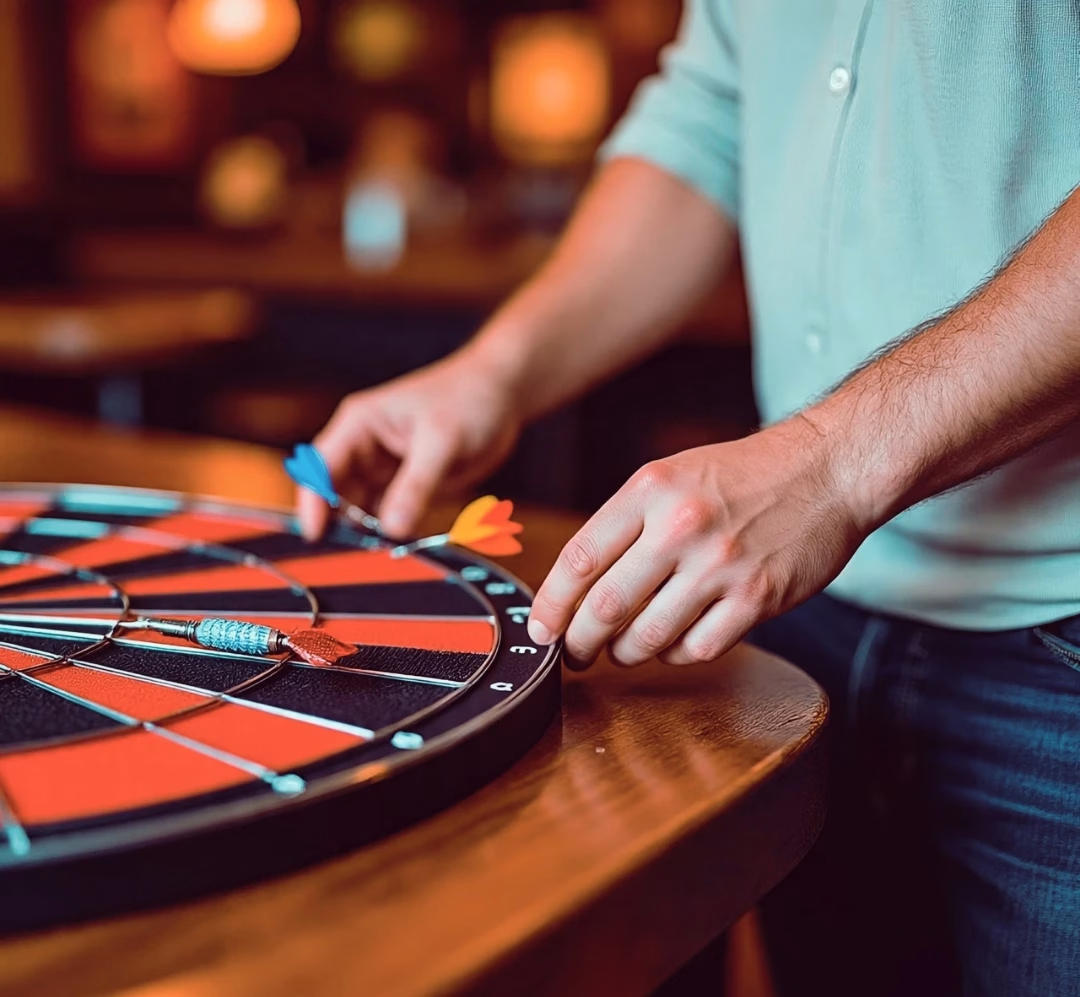
Dart enthusiasts, whether you’re a seasoned pro or just starting out, know that the right equipment can elevate your game. When it comes to choosing darts and dart boards, there’s more than meets the eye. Dive into the world of dart-playing gear with us! The combination of precision-crafted darts and a high-quality board can make all the difference in your performance.
Imagine stepping up to a well-lit board, feeling confident as you grip just the right dart designed for your throwing style. Or picture friends gathered around during game night, enjoying fun challenges while using superior equipment that enhances every throw. Your experience hinges not only on skill but also on selecting tools that match your needs perfectly.
Open the Darts Tools page
In this guide, we’ll help you navigate through various options available in today’s market. From essential features to consider when buying a dartboard to understanding which darts suit your playing style best—this is where you’ll find everything you need for an enjoyable gaming experience. Join us as we explore how making informed choices can transform each session into something extraordinary!
Dartboard Buying Guide
![Tips-for-choosing-a-dartboard- Choosing Darts and Dart Boards [ Complete Detailed]](https://dartspremium.com/wp-content/uploads/2025/08/Tips-for-choosing-a-dartboard-.avif)
Choosing the right dartboard is crucial for both casual players and serious competitors. With various types available, it’s important to understand what each one offers. The two main categories are bristle boards and electronic boards, each with its own pros and cons.
Bristle boards are made from sisal fibers, known for their durability and self-healing capabilities. They’re the preferred choice among purists because they provide a traditional playing experience. When selecting a bristle board, look for high-quality materials that ensure longevity. Brands like Winmau or Viper have established reputations in this space.
On the other hand, electronic dartboards offer a modern twist to gameplay. These boards automatically score your throws and can even track player statistics over time. They’re perfect for family game nights where kids may want to join in without worrying about scoring manually. However, keep in mind that you’ll need access to a power source for these devices.
Size matters when it comes to choosing the right dartboard too. Standard tournament-size boards have a diameter of 18 inches with an inner bullseye measuring 12 inches across—this is what you’ll find commonly used in competitions worldwide. If you’re setting up at home or don’t have much wall space, consider smaller variants specifically designed for tight spaces.
Don’t overlook mounting options either; some boards come with built-in mounts while others require separate hardware installation. Ensure you choose one that’s easy to install but also secure enough so it won’t wobble during playtime sessions! Proper height placement adds another layer of comfort as well: professionals recommend hanging the board’s center 5 feet 8 inches from the floor.
Another aspect worth mentioning is how often you’ll be playing darts at home versus taking them out on trips or events with friends—or if you plan on joining leagues later down the line! Your usage frequency might influence whether investing more upfront makes sense compared against cheaper alternatives that could wear out quickly under heavy use.
Always check customer reviews before making your purchase decision! Feedback from
The Darts Gear You Need
![The-1 Choosing Darts and Dart Boards [ Complete Detailed]](https://dartspremium.com/wp-content/uploads/2025/03/The-1.avif)
When it comes to enhancing your dart-playing experience, the gear you choose is crucial. Selecting the right darts and accessories can significantly impact your performance and enjoyment of the game.
First up are the darts themselves. Darts come in a variety of styles, weights, and materials. Most players find that starting with a weight around 20 grams works well for beginners, but this can vary based on personal comfort and throwing style. Steel-tipped or soft-tipped options depend on whether you’re playing on an electronic board or a traditional bristle board. Each type has its own unique feel when thrown.
Barrel design is another critical factor to consider when choosing darts. The grip varies from smooth to knurled textures; some players prefer more tactile feedback while others gravitate toward smoother barrels for ease of release. Experimenting with different barrel shapes—like tapered versus straight—can help pinpoint what feels most comfortable during gameplay.
Flight design also plays a significant role in how your darts perform in flight. Flights come in various shapes such as standard, slim, or kite-shaped which affect stability during throws. A thicker flight might provide better control while thinner flights could offer increased speed through the air; finding a balance between these characteristics will suit individual preferences.
Don’t overlook shafts either! They connect the barrel to the flight and are available in multiple lengths ranging from short to long, affecting both aerodynamics and accuracy. A longer shaft provides more distance but may introduce wobble if not handled properly; shorter shafts offer quicker releases but require precise technique for optimal results.
Assembling your perfect set requires careful consideration of all components working together harmoniously—not only do they need to feel right individually but also function collectively as one cohesive unit during play sessions at home or competition venues alike!
Beyond just selecting great dart equipment itself lies other essential accessories worth having within reach: scoring boards (if not already integrated), protective cases for transport purposes keeping everything safe from damage & wear over time along with extra flights & shafts so replacements are readily available should accidents occur
| Category | What to Look For | Why It Matters |
| Dartboard | Sisal (Bristle) with “Blade” or “Thin” wiring. | Reduces bounce-outs and lasts for years. |
| Darts Material | 80% to 95% Tungsten. | Allows for thinner barrels and tighter scoring groups. |
| Dart Weight | 22g to 24g (Steel Tip) or 18g (Soft Tip). | The most versatile “starting” weights for beginners. |
| Wall Safety | High-Density Foam Surround. | Protects your drywall and prevents dart tip damage. |
| Accuracy | Raised Oche or Floor Sticker. | Ensures you are throwing from the legal distance every time. |
| Maintenance | Dart Sharpener & Spare Flights. | Prevents board wear and keeps you playing if a part breaks. |
Expert Recommendations for Your Space
For the Living Room: Choose an Electronic Board. They feature “Cyber-Match” modes so you can play against the computer when you’re alone, and the soft tips are safer for furniture.
For the Garage or “Man Cave”: Go with a Bristle Board and a Cabinet. A wooden cabinet not only looks classic but provides extra storage for your spare shafts and flights.
Lighting Tip: If you can’t install a ring light, ensure your room light is positioned directly above or slightly in front of the board to minimize shadows.
Frequently Asked Questions (FAQ)
Q: What is the official height and distance for a dartboard?
A: For a standard steel-tip setup, the center of the bullseye should be 5 feet 8 inches (1.73 meters) from the floor. The throwing distance (the oche) should be 7 feet 9.25 inches (2.37 meters) from the face of the board.
Q: Do I need different darts for an electronic board?
A: Yes. Electronic boards require soft-tip darts (made of plastic). Using steel-tip darts on an electronic board will permanently damage the sensors and the face of the board.
Q: Why do my darts keep falling out of the board?
A: This is usually caused by “bounce-outs” hitting thick round wires or using tips that are too blunt. Switching to a “blade” style bristle board with thin, triangular wiring can reduce bounce-outs by up to 90%.
Q: How often should I rotate my dartboard?
A: If you play daily, you should rotate your board once a week. To do this, simply remove the metal number ring and turn the board so a fresh, un-hit segment becomes the “20.” This prevents the sisal fibers from wearing out in one spot.
Q: What weight of dart is best for beginners?
A: Most beginners find success with a 22g or 24g dart. Heavier darts are generally easier to control as they require less “force” to fly straight, helping you develop a consistent throwing rhythm.
Conclusion:
Selecting the perfect dartboard and darts is about more than just buying a game; it’s about investing in a hobby that offers endless hours of focus, fun, and social connection. By choosing high-quality tungsten darts and a durable sisal bristle board, you ensure that your equipment grows with you as your skill increases.
Remember, the “perfect” setup is the one that feels right in your hand and fits comfortably in your home. Start with the basics—a solid board, a protective surround, and a set of darts that match your grip style—and you’ll be hitting “180s” before you know it.
Step up to the oche, take a deep breath, and let the darts fly!