best darts practice games for beginners
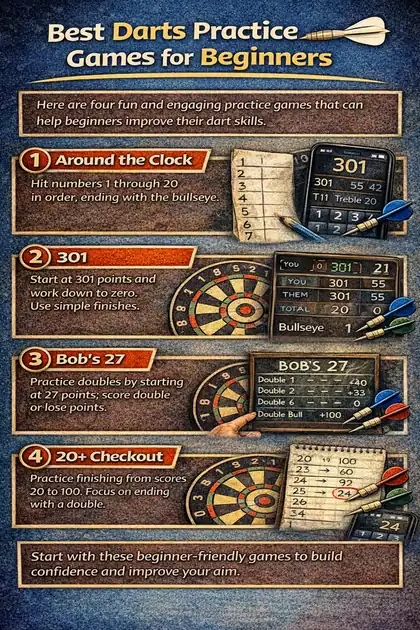
Practicing darts can sometimes feel repetitive, especially for beginners who are still learning accuracy and control. Simply throwing darts at random targets may feel productive at first, but it helps to understand the official rules of darts to give your practice more meaning.
When we first started practicing darts at home, improvement was inconsistent. Some days felt great, while others felt pointless. Once we introduced structured practice games, everything changed. Practice became more focused, more enjoyable, and progress became easier to track.
This guide covers the best darts practice games for beginners, explains how to play each one, and shows what skills they improve. These games are simple, effective, and perfect for home practice.
New players should start with our best dartboards for beginners guide.
🧠 Why Practice Games Are Important for Beginners
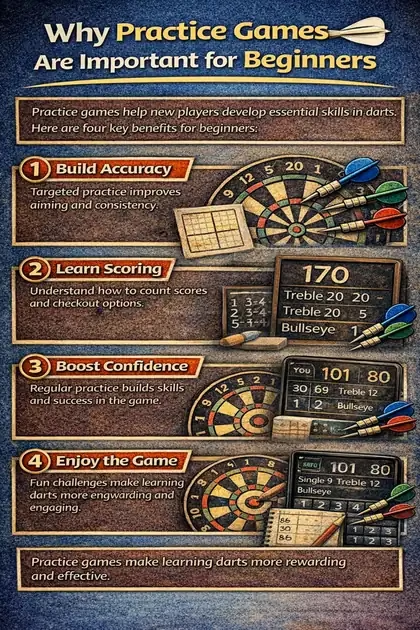
Darts is a game of repetition, but repetition without structure doesn’t always lead to improvement. Practice games give your sessions purpose.
Practice games help beginners:
Focus on accuracy instead of power
Learn the dartboard layout
Build consistency and muscle memory
Stay motivated and engaged
Instead of throwing aimlessly, practice games give you clear goals.
🎯 What Makes a Good Beginner Practice Game?
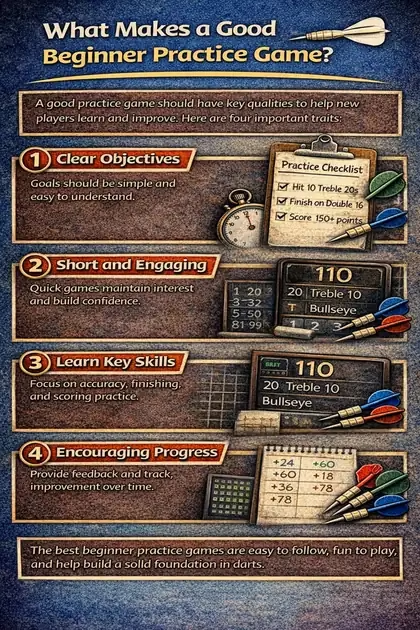
Not all dart games are ideal for beginners. The best beginner games are:
Easy to understand
Focused on accuracy
Playable alone
Flexible for different skill levels
Games that focus only on scoring can be discouraging early on. Accuracy-based games are much more effective.
🟢 Practice Game #1: Around the Clock
Skill Focus
Accuracy across the entire dartboard
How to Play
Start at number 1
Hit each number in order up to 20
You must hit the current number before moving on
Why It’s Great for Beginners
This game forces you to aim at every section of the board, not just your favorite numbers.
Beginner Tip
Don’t rush. Focus on smooth throws rather than speed.
🟢 Practice Game #2: Bullseye Challenge
Skill Focus
Control and precision
How to Play
Throw all darts at the bullseye
Don’t worry about hitting it every time
Focus on grouping darts near the center
Why It’s Great for Beginners
This game improves release control and builds confidence.
From our experience, this drill greatly improves overall aim even outside the bullseye.
🟢 Practice Game #3: Big Number Practice (20, 19, 18)
Skill Focus
Consistency and grouping
How to Play
Aim for the large single segment of 20
Throw 9–15 darts
Repeat for 19 and 18
Why It’s Great for Beginners
Large targets reduce frustration and allow beginners to focus on technique.
🟢 Practice Game #4: Three Dart Average Drill
Skill Focus
Consistency over time
How to Play
Throw three darts at any target
Record the total score
Repeat for multiple rounds
Why It’s Great for Beginners
Tracking averages helps beginners see progress clearly.
🟢 Practice Game #5: 50-Point Challenge
Skill Focus
Accuracy and patience
How to Play
Start at zero
Hit any scoring area to earn points
Reach exactly 50 points
Why It’s Great for Beginners
This game encourages careful aiming and controlled throws.
🟢 Practice Game #6: Doubles Practice
Skill Focus
Precision and finishing skills
How to Play
Choose one double (e.g., double 10)
Throw until you hit it
Move to another double
Why It’s Great for Beginners
Doubles are often difficult for beginners. This game builds confidence.
🟢 Practice Game #7: Grouping Challenge
Skill Focus
Consistency and muscle memory
How to Play
Choose one target
Throw all darts at that target
Measure how close darts land to each other
Why It’s Great for Beginners
Tight grouping shows improvement even when you miss the target.
🟢 Practice Game #8: Half-It (Beginner Version)
Skill Focus
Focus and recovery
How to Play
Aim for one number
If you miss completely, your score is halved
Move to the next number
Beginner Adjustment
Use large numbers first to reduce frustration.
🟢 Practice Game #9: Countdown Game
Skill Focus
Control and accuracy
How to Play
Start at 100
Subtract the score of each round
Reach zero exactly
Why It’s Great for Beginners
This teaches control without pressure.
🟢 Practice Game #10: Accuracy Zones
Skill Focus
Board awareness
How to Play
Divide the board into zones
Aim only at one zone per round
Rotate zones each session
Why It’s Great for Beginners
This builds full-board confidence.
🧠 How to Structure a Beginner Practice Session

A good practice session includes multiple games.
Sample 30-Minute Session
5 minutes warm-up
10 minutes accuracy game
10 minutes grouping game
5 minutes fun or relaxed game
Short, focused sessions work best.
❌ Common Mistakes Beginners Make During Practice Games
Playing Too Fast
Speed reduces accuracy.
Focusing Only on Winning
Practice games are about improvement, not scores.
Skipping Games That Feel Hard
Hard games often improve skills fastest.
🧠 Mental Benefits of Practice Games
Practice games:
Reduce boredom
Build confidence
Improve focus
Make practice enjoyable
From what we’ve seen, beginners who enjoy practice stick with darts longer.
More benefits of Automatic darts scoring system.
🕒 How Often Should Beginners Use Practice Games?
Ideally:
4–6 practice sessions per week
20–30 minutes per session
Consistency matters more than intensity.
New players should start with our best dartboards for beginners guide.
📈 Tracking Progress with Practice Games
Tracking progress keeps motivation high.
Simple Tracking Methods
Write down scores
Track how long games take
Note improvements in grouping
Small improvements add up over time.
❓ Frequently Asked Questions
Can beginners practice alone?
Yes. Most of these games are solo-friendly.
Do practice games replace real matches?
No, but they improve skills faster.
How long until improvement?
Most beginners notice progress within weeks.
Should beginners play advanced games?
Not at first. Start simple.
If you have more questions, the Reddit Darts Community is a great place for beginners to get feedback on their throw and equipment.
🧠 Final Thoughts
The best darts practice games for beginners are the ones that focus on accuracy, consistency, and enjoyment. You don’t need complex rules or competitive pressure to improve. Simple, structured games help build strong fundamentals and confidence.
From our experience, beginners who use practice games improve faster, stay motivated, and enjoy darts more. Whether you practice alone or with friends, these games give your sessions purpose and direction.
Start with a few games, practice regularly, and enjoy the process. Improvement will follow naturally.
Once you have mastered these basics, you can explore more technical darts practice routines to keep your progress moving forward.
🔒 Transparency Notice
This article is for informational purposes only. Results may vary depending on individual practice habits and skill levels.